Training the Next Generation
The Training Program in Translational Cardiovascular Science (TPTCS) is an NIH-funded T32 program that brings together investigators and trainees across University of Wisconsin–Madison to foster rigorous, collaborative research training in translational cardiovascular science.
Primary research areas include:
- Heart failure and contractility
- Ion channels and arrhythmias
- Vascular biology and atherosclerosis
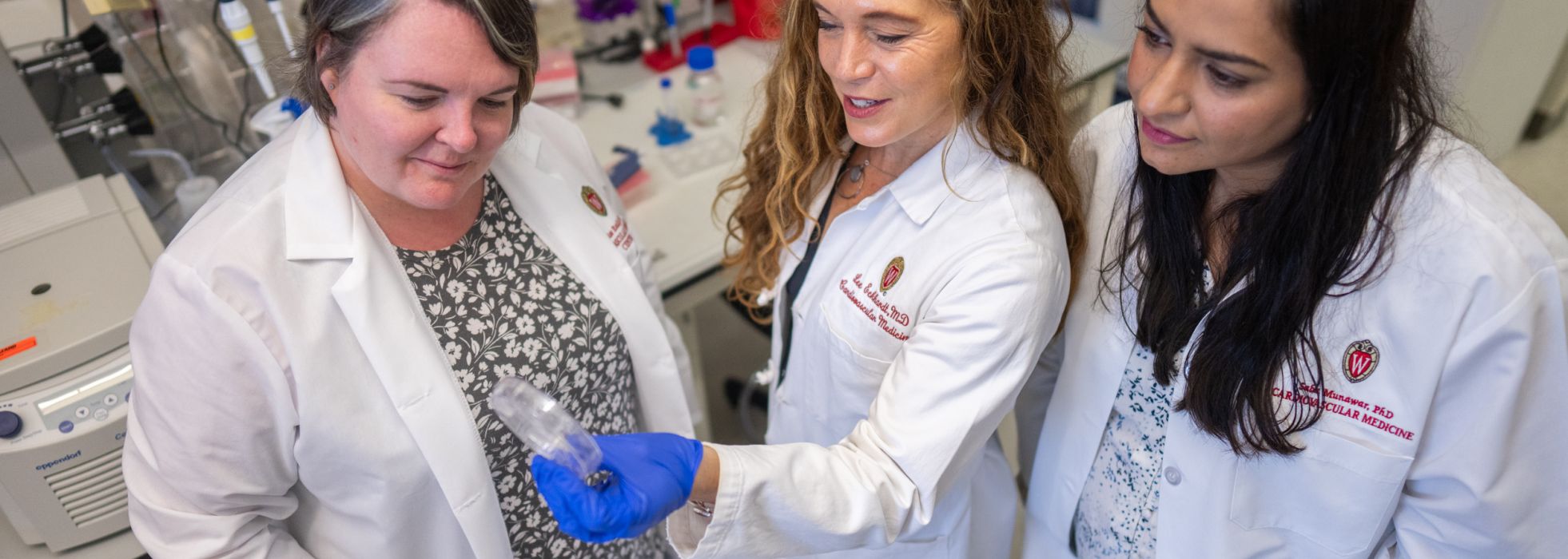
Why You'll Love Our Program
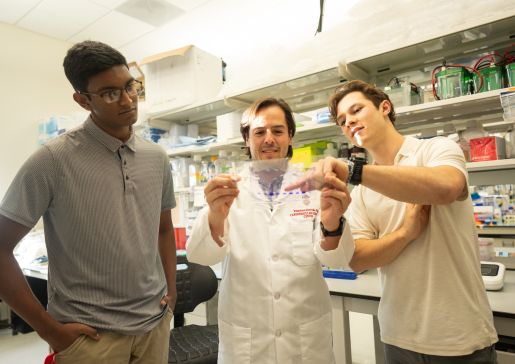
Interdisciplinary exposure. TPTCS draws trainees at various career stages from 13 graduate programs and 13 departments. Our training faculty also bring diverse and interdisciplinary approaches to the study of cardiovascular disease.
Translational focus. We emphasize the development and application of research from the level of the cell and molecule, through intact tissue models and animal models, to the patient.
Cross training. We offer basic research training for clinically oriented individuals, while at the same time providing PhD trainees with the background and experiences to undertake clinically motivated research.
Application Process
Predoctoral Candidates
- Eligibility
- Bachelor’s degree required
- Must be enrolled in a PhD or comparable research doctoral program at UW–Madison by the start of the award
- Preference given to students entering their second year of graduate study or later
- U.S. citizen or permanent resident (at time of appointment)
- Support and Duration
- One year of T32 support, with possible second year based on funding availability and research progress
- Full tuition covered during the training appointment
- NIH trainee stipend provided
- Application Materials
- General application form
- Curriculum vitae
- Statement of career goals and previous research experience (1 page)
- Personal statement highlighting background or education (up to 1 page)
- Unofficial graduate transcript
- Letter of support from mentor including a training plan (1–2 pages)
- Mentors must also identify a source of non‑sponsored funds to cover the difference between the NIH stipend and UW graduate RA pay rate
- Letters of recommendation and undergraduate transcript will be obtained from the graduate school application
Application deadline: The application deadline for 2026 has passed.
Submit application materials to Eric Schafer.
Postdoctoral Candidates
- Eligibility
- Open to post-PhD and post-MD candidates
- U.S. citizen or permanent resident
- Support and Duration
- One year of T32 support, with possible second year based on funding availability and research progress
- Mentorship
- Candidates are typically nominated by a TPTCS trainer or CVRC‑affiliated faculty member
- Interested applicants may encourage prospective mentors to affiliate with the training program
- External applicants are encouraged to contact prospective mentors (see Faculty Trainers)
- Application Materials
- General application form
- Curriculum vitae
- Career plan statement (1–2 pages) describing past, current, and proposed research and long‑term career goals
- Personal statement highlighting background or education (up to 1 page)
- Letter of support from an affiliated or affiliating mentor, including a training plan and mentor training status (1–2 pages)
Application deadline: The application deadline for 2026 has passed.
Submit application materials to Eric Schafer.
Important note: If you are a PI, but not a current TPTCS trainer, and have a trainee (either predoc or postdoc) who would like to apply to the program, please also include a copy of your CV with the required application materials. Please outline your training history and current/pending funding.
Current Trainees
Adjacent Trainee
Faculty trainer: Ying Ge, PhD (Cell & Regenerative Biology)
Research focus: Using native top-down to better understand mechanisms behind cardiovascular disease

Postdoctoral Trainee
Faculty trainer: Kenneth Poss, PhD (Cell & Regenerative Biology)
Research focus: Metabolic underpinnings of cardiac muscle regeneration in zebrafish
Adjacent Trainee
Faculty trainer: William Schrage, PhD (Kinesiology)
Research focus: Vascular function and blood flow regulation in response to exercise and gaseous stressors
Postdoctoral Trainee
Faculty trainer: Timothy Kamp, MD, PhD
Research focus: Inherited arrhythmia disease models
Postdoctoral Trainee
Faculty trainer: Carol Mitchell, PhD
Research focus: Machine learning/ultrasound imaging and abdominal aorta aneurysms
Adjacent Trainee
Faculty trainer: Alexey Glukhov, PhD, MS
Research focus: Cardiac electrophysiology and regeneration
Postdoctoral Trainee
Faculty trainer: Zachary T. Campbell, PhD (Anesthesiology)
Research focus: Mechanisms of translational control in neuronal and non-neuronal cells to better understand chronic vascular and neuropathic pain
Adjacent Trainee
Faculty trainer: Lee Eckhardt, MD, MS
Research focus: Structural-functional relationship of KCNJ2 mutations
Predoctoral Trainee
Faculty trainer: Valentina Lo Sardo, PhD (Cellular and Regenerative Biology)
Research focus: 9p21.3 risk locus, the most impactful genetic risk factor for coronary artery disease
Predoctoral Trainee
Faculty trainer: Wei Guo, PhD (Animal & Dairy Sciences)
Research focus: Developing methods of regulating exon usage and manipulating alternative splicing patterns in cardiac sarcomere proteins
Predoctoral Trainee
Faculty trainer: Jill Barnes, PhD (Kinesiology)
Research focus: Sex differences in cerebral hemodynamics with age (e.g., cerebral pulsatility); how cerebral hemodynamics relate to autonomic function/dysfunction and overall brain health
Postdoctoral Trainee
Faculty trainer: Alexey Glukhov, PhD, MS
Research focus: Mechanisms of exercise-induced cardiomyopathy
Predoctoral Trainee
Faculty trainer: Lee Eckhardt, MD, MS (Medicine)
Research focus: Modeling Lamin-associated arrhythmogenic cardiomyopathy
Program Leadership
Department of Medicine
Training Program Project Coordinator
Faculty Trainers
- Francisco Alvarado, PharmD, PhD (Medicine)
- Alan D. Attie, PhD (Biochemistry)
- Jill Barnes, PhD (Kinesiology)
- Emery H. Bresnick, PhD (Cell & Regenerative Biology)
- Wendy C. Crone, PhD (Engineering Physics)
- Lee Eckhardt, MD, MS (Medicine)
- Ying Ge, PhD (Cell & Regenerative Biology)
- Adam Gepner, MD (Medicine)
- Alexey Glukhov, PhD, MS (Medicine)
- Timothy Kamp, MD, PhD (Medicine)
- Junsu Kang, PhD (Cell & Regenerative Biology)
- Lingjun Li, PhD (Pharmacy; Chemistry)
- Bo Liu, PhD (Cell & Regenerative Biology)
- Valentina Lo Sardo, PhD (Cell & Regenerative Biology)
- Federico Rey, PhD (Bacteriology)
- Gail Robertson, PhD (Neuroscience)
- Alejandro Roldán‑Alzate, PhD (Mechanical Engineering)
- William Schrage, PhD (Kinesiology)
- Weiping Tang, PhD (Pharmaceutical Sciences; Chemistry)
- Veli Topkara, MD, MSc (Medicine)
- Héctor Valdivia, MD, PhD (Medicine)
- Colleen Witzenburg, PhD (Biomedical Engineering)
- Jingshing Wu, MD, PhD (Pediatrics)
Curriculum and Requirements
Responsible Conduct of Research: Trainees are required to complete or have completed a course on the Responsible Conduct of Research.
Annual Mentoring Meeting: Trainees will meet with program leadership to create and discuss Individual Development Plans (IDPs). Together they will assess current skills and interests, set academic and career goals, and facilitate conversations with their mentors.
Annual Progress Report: Timely annual progress reports will be expected of all trainees. Trainees will be required to report on career changes to the training program administrator for fifteen years after the end of the funding period.