Inquiry and Innovation
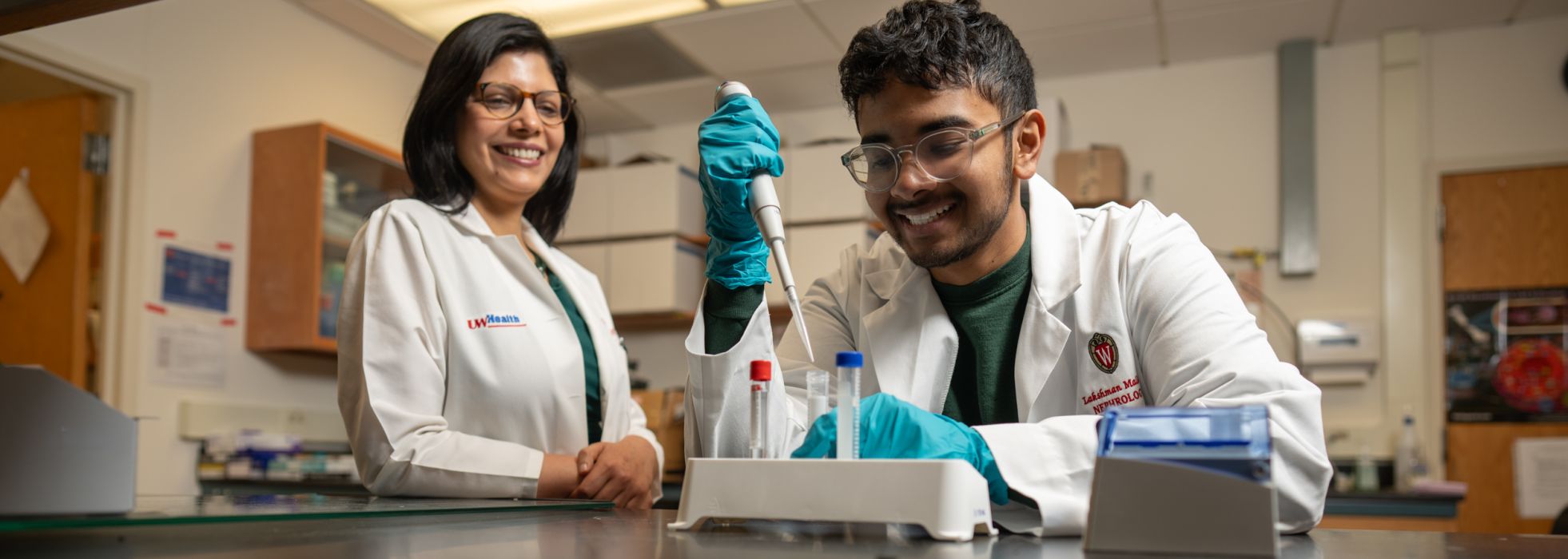
Research is an important component of the University of Wisconsin Nephrology fellowship.
With support from investigators in our division, department and campus, you’ll participate in innovative research and learn to develop your own projects.
Learn more about our department’s research environment.
Personalized Research Experience
Choose elective rotations in research areas that support individual career goals. Topics include:
- Clinical problems associated with dialysis, transplantation or progression of renal disease
- Clinical pharmacology in patients with renal disease
- Research in renal physiology or pathophysiology of renal disease
For questions about research opportunities, contact Brad Astor, PhD, MPH.
Learn more about mentoring in our fellowship.
Protected Time
You can use elective time for research (8 weeks in the first year, 12 weeks in the second year). In addition, you can request additional elective time by submitting a proposal of how the additional elective time will be used to further your career and/or research goals.
Opportunities for Collaboration
Whether you are interested in basic, translational, clinical or health services research, there’s a collaborator for you here.
- Division of Nephrology research
- Basic science transplantation research in the Department of Surgery: Brown Lab | Odorico Lab
Presentations, Publications and Awards
Fellows present research findings at these conferences:
- National Kidney Foundation (NKF) Spring Clinical Meeting
- American Society of Nephrology (ASN) Kidney Week
- American Society of Diagnostic and Interventional Nephrology (ASDIN) Annual Scientific Meeting
- American Transplant Congress (ATC)
Each fellow typically completes at least one national conference presentation and authors at least one publication during training.
Getting Funded
Mentor(s) work with you individually to identify grant funding opportunities.
The Department of Medicine also offers a pilot award program for residents and fellows, and our Office of Research Services provides biostatistical services, grant writing education and other career development opportunities for learners.
Richard and Nina Rieselbach Nephrology Fellowship Award
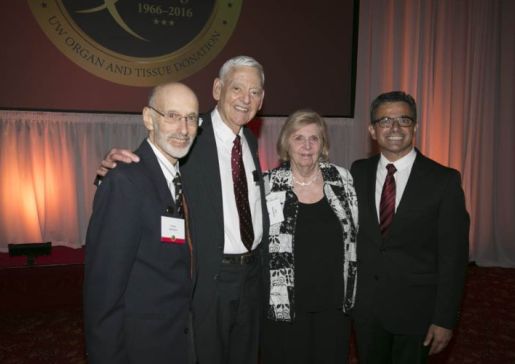
In addition, thanks to the generosity of Dr. Richard Rieselbach, there is a funding opportunity available to nephrology fellows each year. The Richard and Nina Rieselbach Nephrology Fellowship Award provides annual assistance to University of Wisconsin Nephrology Fellows to further their academic development. The fund can be used for research, travel or conference activities that support academic development of award recipients. Funding of up to $4,500 per year for one year will be awarded each academic year and may be split across multiple fellows.
A philanthropic gift from former nephrology fellow Frank Gutmann, MD, MPH and his wife Mary Gutmann, PhD, has established an annual award to further the academic development of early-career nephrologists at UW–Madison.
Photo credit: John Maniaci / UW Health
2025–2026 Awardee
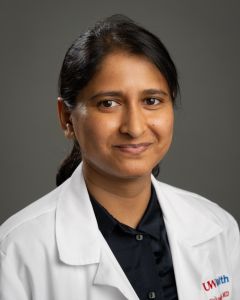
Project: Advanced Point-of-Care Ultrasound Training
Mentor: Dr. Tripti Singh
Dr. Salwa pursued advanced point-of-care ultrasound (POCUS) training through the UW Health Focus on POCUS program. The training strengthens bedside assessment of volume status, pulmonary congestion, and vascular access, with the goal of improving diagnostic decision-making and patient care while expanding POCUS education for future nephrology fellows and advanced practice providers.
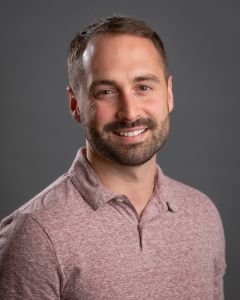
Nolan Interial, DO, MS
2024–2025 Awardee
Project: Renal Physicians Association First Look Fellowship
Mentor: Dr. Tripti Singh
Dr. Interial participated in the Renal Physicians Association First Look Fellowship. Through experiences in healthcare policy, advocacy, practice management, billing and coding, and physician leadership, the fellowship prepared him to advocate for kidney care and pursue future leadership roles at the intersection of clinical nephrology and healthcare policy.
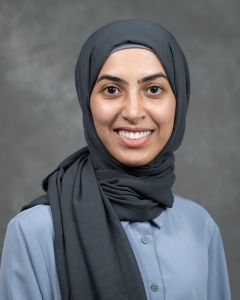
Eman Alshaikh, MBBS
2023–2024 Awardee
Project: Peritoneal Dialysis Education Curriculum
Mentor: Dr. Tripti Singh
Dr. Alshaikh advanced the development of an asynchronous peritoneal dialysis curriculum focused on the diagnosis and treatment of PD-related peritonitis. Building on her quality improvement work, the curriculum incorporates clinical cases, interactive questions, videos, and teaching pearls to help nephrology fellows and medicine residents develop the skills needed to appropriately recognize and manage PD-related peritonitis.
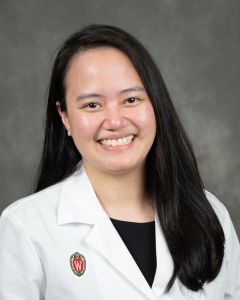
Angelie Santos, MD
2022–2023 Awardee
Project: Continuous Renal Replacement Therapy Quality Improvement and Education
Mentor: Dr. Tripti Singh
Dr. Santos addressed quality and educational gaps in continuous renal replacement therapy (CRRT). Her project focused on improving the citrate anticoagulation protocol to make CRRT delivery more efficient and cost-effective, while also developing an asynchronous curriculum to strengthen nephrology fellows’ knowledge and skills in prescribing and delivering CRRT.