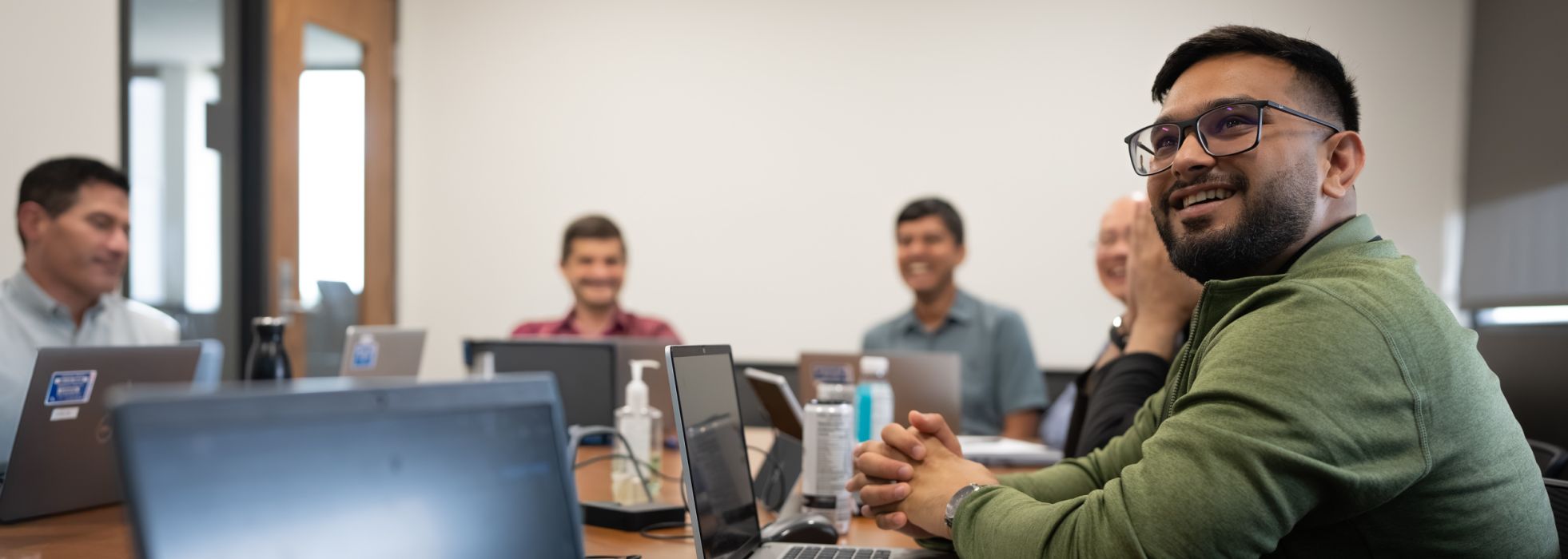
Customized Training for the Career You Want
We offer a personalized learning experience that includes unique elective rotations, project-based learning and opportunities for innovation and collaboration with industry leaders and researchers.
Our foundational curriculum will prepare you well for board certification and job placement.
Our curriculum combines thoughtfully-designed rotations, project-based learning tailored to your interests, and longitudinal activities throughout the year:
|
|
Sample Block Schedule
Year 1
- Projects: Two, each for half the year, on Workflow Improvement and Quality Improvement
| Block | Rotation |
|---|---|
| 1 | Introduction to Clinical Informatics |
| 2 | Electronic Health Records |
| 3 | |
| 4 | |
| 5 | |
| 6 | |
| 7 | Data Science and Analytics, Emerging Technologies, and Clinical Decision Support |
| 8 | |
| 9 | |
| 10 | Quality, Safety, Population Health, and Process Improvement |
| 11 | |
| 12 | Projects |
Year 2
- Projects: Two smaller projects throughout the year focusing on digital health or emerging data sources. Options include:
- Research informatics
- Clinical informatics education
- Pharmacy informatics
- Training and support
- Population health
- Predictive analytics/artificial intelligence
| Block | Rotation | Larger Project(s) or Research |
|---|---|---|
| 13 | Research/ Project | Initiation |
| 14 | ||
| 15 | Imaging Informatics | Execution |
| 16 | Research/ Project | |
| 17 | ||
| 18 | Reporting/Data Analysis | |
| 19 | Laboratory Informatics | |
| 20 | Research/ Project | |
| 21 | ||
| 22 | Completion/Presentation | |
| 23 | ||
| 24 | Informatics Leadership |
Didactics
Fellows will spend one half-day a week interacting with faculty at in-person learning sessions that cover the core concepts of clinical informatics, with embedded professional development, leadership, and health systems threads.
We have developed our own content and experiences tailored to applied clinical informatics. Fellows interact with leaders and multi-disciplinary professionals from within the health system and beyond.
Project-Based Learning
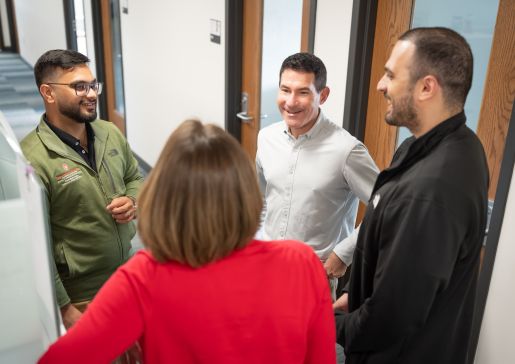
Each fellow will lead initiatives in workflow improvement, quality improvement and complete a large capstone project.
Fellows complete different build and analytics projects depending on their specific interests. Each fellow becomes an Epic Physician builder and Cosmos Super User. Our fellows gain experience through real world project work.
Scholarly Activity
Scholarly activity opportunities range all the way from doing the necessary background work to conduct a quality improvement project to programming your own machine learning algorithm. You can choose your focus based on your clinical interests and career goals.
Collaborative Research
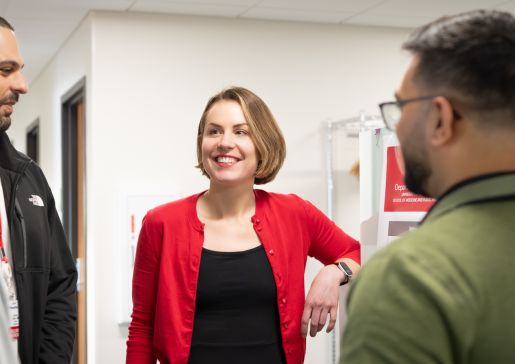
Fellows can also conduct collaborative research with our experts in:
- Natural language processing and machine learning
- Provider documentation burden reduction
- Health equity
- Medication prescribing safety
- And many more areas
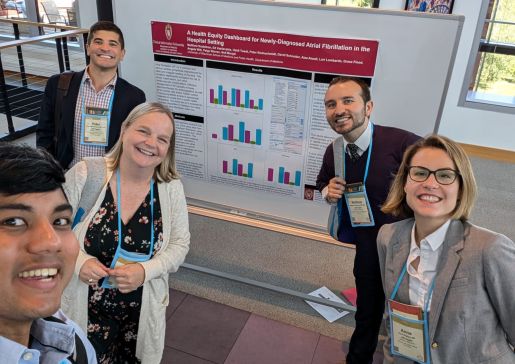
Meet the Informatics Teams
Fellows can choose to work with a variety of informatics teams at UW:
- ICU Data Science Lab | Department of Medicine
- Learning Health System (LHS) | UW Institute for Clinical and Translational Research (ICTR)
- Dr. Peter Kleinschmidt's research | Department of Medicine
Check out UW-Informatics on Google Scholar for a taste of our work.
Unique Opportunities
- Clinical research informatics at St. Jude Children’s Research Hospital. Spend a month immersed in the informatics needs of a world-class research hospital. Collaborate with their informatics, research and information systems leaders to learn the unique informatics needs of clinical research. This will include exploring their cutting-edge work in pharmacogenomics, global medicine, biopharmaceuticals and patient experience. Fellows need not be a pediatrician to participate. This experience also affords fellows the opportunity to experience a different Epic implementation.
- Software development at Epic Systems Corporation. Spend time with developers and data scientists at Epic headquarters throughout the fellowship to participate in the vetting of new functionality and the development lifecycle.
Clinical Practice
Fellows will maintain their clinical skills through a 20 percent clinical practice, arranged through their clinical department.