Preparing future physicians to address firearm injury prevention
Drs. Siobhan Wilson and James Bigham develop new elective course for medical students
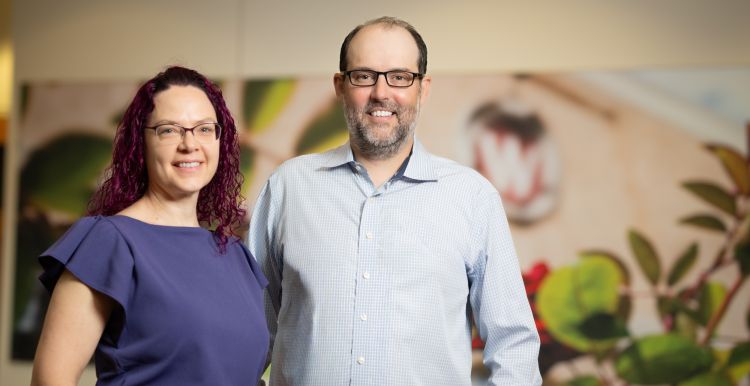
Medical students at the University of Wisconsin School of Medicine and Public Health juggle a demanding required curriculum, but they also have opportunities to explore electives that reflect their interests and passions.
One of the newest options is an elective course that gives third- and fourth-year medical students a better understanding of firearms and prepares them to talk with patients about injury prevention.
The course was developed through a collaboration between Siobhan Wilson, MD, PhD, clinical associate professor, Division of General Internal Medicine; and James Bigham, MD, MPH, clinical professor, Department of Family Medicine and Community Health; and many academic and community partners.
Filling a gap in medical education
Through the course, students examine the epidemiology of firearm injury and death in the United States, explore the role clinicians can play in advancing prevention efforts, and build relationships with community partners working in this space. Participants also collaborate with those partners to design model interventions aimed at reducing firearm-related injuries in their communities.
Bigham, the course director, and Wilson, the co-director, agree the elective fills an important educational gap.
“Firearm-related injuries are now the leading cause of death for children and adolescents aged 1–19, yet this critical issue has historically remained an overlooked component of medical education,” says Bigham.
“One of the things James and I both struggled with was the complete absence of firearm injury prevention in the undergraduate medical education curriculum,” adds Wilson.
The course brings together a wide range of perspectives. Guest speakers have included Sophie Kramer, MD, FACP, clinical assistant professor, Geriatrics and Gerontology, who discusses physician advocacy, and John Diedrich, an investigative reporter for the Milwaukee Journal Sentinel, whose recent project, Behind the Gun, was the first comprehensive effort to obtain gun death data from every county in Wisconsin.
Students also visit Max Creek Outdoors, a local partner gun shop, where they learn more about firearms, safe handling, secure storage, and participate in supervised target shooting on the range if interested.
Teaching critical conversations
For students, this hands-on exposure helps demystify the topic of firearm injury prevention, and shows them how it fits into their identity as physicians.
For third year medical student Daniel Polio, who grew up in California around people with deeply divided views on firearm policy, the elective reinforced how important language and listening are in clinical conversations.
“Given my lived experience interacting with people on both sides of the spectrum, I wanted to take this class to get a better idea of how I can talk to patients about firearms,” he says. “Regardless of a patient’s stance, they should be provided with essential information to keep themselves and their families safe.”
Collaboration and community engagement
Wilson and Bigham are grateful to the cross-disciplinary collaborators who helped make this course possible.
Those collaborators include Dr. Kramer, who assisted with course development and assignments; Stephen Bagwell, a public health integrative case manager in the Medical Education Office; Nicole Watson, MPH, who provides essential programmatic support; and Dr. Parvathy Pillai and Amy Neeno-Eckwall, who helped with the course proposal and approval process.
Bigham’s longstanding partnership with Max Creek Outdoors was also important in getting the course off the ground. In fact, in honor of the shop’s owner, Steve D’Orazio, who passed away last year, Max Creek built a classroom to continue supporting education and community engagement around firearm injury prevention, including programs Bigham has led for health professionals.
Education beyond the classroom
For Wilson and Bigham, firearm injury prevention education extends far beyond the course.
They are also faculty co-advisors for the SAFE (Scrubs Addressing the Firearm Epidemic) student group at the UW School of Medicine and Public Health, teach residents in six specialties at UW Health and in the Aurora Internal Medicine primary care track, and present on the topic at numerous regional and national continuing medical education events.
Wilson is also a member of the ACP Wisconsin Chapter Health and Public Policy Committee and chairs its Gun Violence Prevention Advocacy Workgroup. In 2025, the Department of Medicine’s Division of General Internal Medicine presented her with an Advocacy and Public Health Award for her work.
Bigham is the co-founder of Lock, Stock, and Barrel, a hands-on firearm injury prevention program connecting health professional students, clinicians, and the firearm community.
They, like the students who have chosen this elective, see firearm injury prevention as a core clinical and public health responsibility.
“Discussing firearm injury prevention should be as standard as talking about wearing a helmet or using a seatbelt,” reflects Polio. “I hope to be part of a generation of physicians who are comfortable discussing secure firearm storage with patients.”
Adapted from this article published in May 2026 by the UW Department of Family Medicine and Community Health.