Five Department of Medicine residents receive 2026 Sheehy Fund and Sunde Awards

Each year, two funding resources—the Sheehy Family Fund and the David Sunde Humanitarian Awards—help University of Wisconsin Department of Medicine (UW DOM) internal medicine residents develop and enact projects with a distinct humanitarian focus.
Congratulations to this year’s five awardees!
Sheehy Family Fund
The Sheehy Family Fund supports internal medicine residents with projects that give back to the community and uphold medicine’s core calling of service to humanity. (Read a related article.)
This year, two residents will receive support from the Sheehy Family Fund for projects that benefit the low-income and underinsured patient populations at the UW MEDiC Clinics—free clinics run by UW School of Medicine and Public Health students in the Madison area.
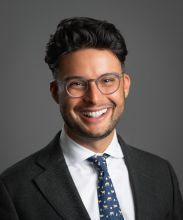
Daniel Pardo, MD
Cardiovascular Risk Reduction for MEDiC
Creates a six-month pilot cardiovascular risk reduction program that will use blood pressure, weight, height, and point-of-care A1C and lipid profile analysis to generate an atherosclerotic cardiovascular disease (ASCVD) risk score for patients. High-risk individuals may then receive outpatient referral. The program will also provide patients with English and Spanish-language handouts about relevant lifestyle interventions.
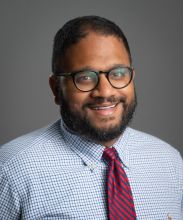
Arun Augustine, MD
At Home COVID testing for MEDiC Clinics
Provides affordable at-home COVID-19 test kits for patients and families with limited financial means, with a goal of improving the seasonal burden of COVID-19 through improved testing.
Sunde Awards
The David Sunde Humanitarian Awards come with funding for resident projects that recognize the importance of putting one’s personal ego aside, working as a team, and treating a patient not just as someone who is an “interesting case,” but a full-fledged human being. (Read a related article.)
This year, three residents received a Sunde Award.
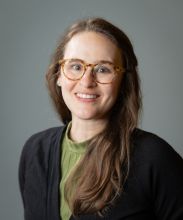
Sam Shapiro, MD
Building Connection and Community Through LEGO®️ Flowers
Provides LEGO®️ flower kits for the resident library, for a durable and shareable resource that promotes teamwork and communication, improves mood, decreases stress, and beautifies the working environment.
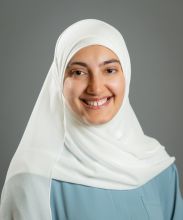
Zaynab Almothafer, MD, MBS
HER MD (Healing, Empowerment, and Resilience)
Launches a six-session course, largely for women residents, that fosters leadership skill development and professional growth, cultivates collaboration and mentorship between residents and faculty, fosters long-lasting and sustainable support networks, and provides a dedicated space and community for residents who identify as women in medicine.
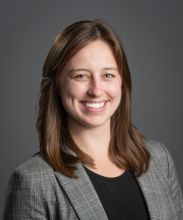
Kat Tippins, MD
Resident Workroom Active Recovery Station
Creates a dedicated Active Recovery Station in the resident workroom: a small, accessible space-equipped with tools (such as a massage gun and light exercise equipment) to encourage brief, restorative physical breaks that counteract the back, neck and shoulder strain and fatigue experienced by residents, as well as foster mindfulness and camaraderie during demanding rotations.