Dr. Freddy Caldera provides critical guidance on measles vaccinations for immunosuppressed patients
Collaborative paper builds on Dr. Caldera's prior work around vaccine safety
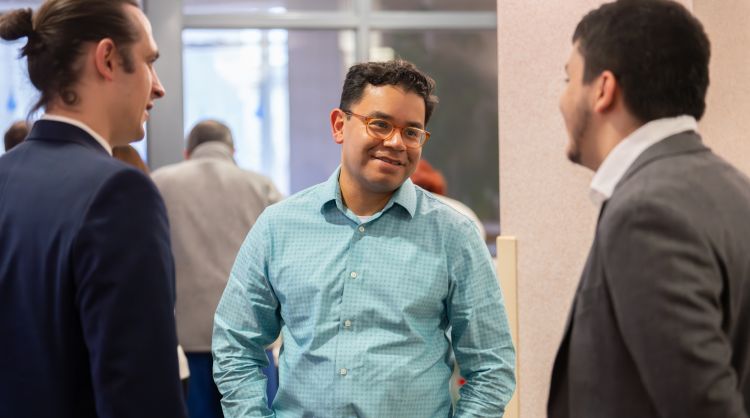
Thousands of measles cases were confirmed throughout the United States in 2025 and early 2026. For patients on immunosuppressive medications and therapies, the resurgent virus poses a significant threat.
Fortunately, a new publication by Freddy Caldera, DO, PhD, MS, Yehle Family Professor in IBD Research, Gastroenterology and Hepatology, provides gastroenterologists and hepatologists—who often work with immunosuppressed patients—with critical guidance around vaccination and other preventative care measures.
Despite its subspecialty audience, the paper is a collaboration between experts in the University of Wisconsin Departments of Medicine (UW DOM) and Pediatrics, as well as the UW School of Pharmacy.
“The big thing is that our data can be applicable to anyone who takes care of immunosuppressed populations,” Dr. Caldera notes.
Immunity and risk
Most adults in the United States have received two doses of the live measles, mumps, rubella (MMR) vaccine and are immune. Patients who received both doses, whether currently on immunosuppression or not, are largely considered safe.
“We know most of the recent cases are occurring in children or adults who are not vaccinated,” Dr. Caldera says.
Unvaccinated patients on immune-modifying therapies or biologics—those being treated for inflammatory bowel disease (IBD), for example, or recent liver transplant recipients—are at the greatest risk of severe complications, such as pneumonia or acute encephalitis, leading to hospitalization or death.
However, the paper emphasizes, immunosuppressive medications should not be stopped to vaccinate a patient without immunity. (It notes the latter scenario is unlikely given the high uptake of MMR vaccine prior to the pandemic.)
“Don't stop your transplant or IBD meds," Dr. Caldera adds. "If you're on a biologic, don't stop your biologic.”
The paper also suggests that patients who don’t know their immunization status should not use serology to determine their immunization status, given a growing body of evidence around the inaccuracy of commercial serology assays.
The big thing is that our data can be applicable to anyone who takes care of immunosuppressed populations.
Dr. Caldera
Protecting patients
For all immunosuppressed patients, vaccinated or not, the paper stresses preventative strategies as the primary course of action. It offers the following general strategies to providers:
- Assess vaccination status before initiating immunosuppression
- Vaccinate before treatment when possible
- Ensure that household contacts are immunized
- Coordinate postexposure prophylaxis when needed
- Serve as vaccine advocates and combat vaccine misinformation
Dr. Caldera points out that the final takeaway is critical. Vaccination rates are gradually dropping in the U.S., in part due to a growing lack of public confidence in vaccine safety, and now those rates fall below the >95% coverage threshold critical to maintain adequate population immunity.
“We're all here to help our patients," he says. "By helping them navigate risks and boost trust, we can rebuild public confidence in vaccines, in science, in the work we do as researchers and clinicians."
Shaping preventative care
The new paper is the latest example of Dr. Caldera’s expertise in IBD combined with a career-long passion for preventative health care.
His work on vaccine-preventable diseases in IBD patients informed a key part of the American College of Gastroenterology’s (ACG) 2025 clinical guidelines update on preventative care for IBD. He was also lead author on the 2025 American Gastroenterological Association (AGA) clinical practice update for noncolorectal cancer screening and vaccinations in IBD patients.
Currently, Dr. Caldera’s lab investigates risk differences in live vaccines for immunosuppressed populations, as well using large databases such as Optum to evaluate the safety of medications in IBD treatment.
This research is made possible through several funding sources, including Dr. Caldera’s endowed faculty position, the Yehle Family Professorship in IBD Research.
He was named to the new appointment in January 2026. It comes with five years of financial support—a crucial resource, considering recent cuts to federal research funding.
I’m really grateful to the Yehle family for their support. It's definitely transformative. It lets me do work that has a clinical impact for patients with IBD.
Dr. Caldera