Epigenetics in Sarcoma
Dr. Ryan Denu is a physician-scientist and medical oncologist who treats patients with sarcoma and whose research focuses on understanding more about sarcoma and developing new treatments for sarcoma.
Ryan Denu Research Group
Dr. Denu's research focuses on defining how epigenetic and transcriptional programs drive cellular plasticity in sarcoma and determining how these processes can be therapeutically targeted. He investigates how chromatin remodeling and lineage-inappropriate transcriptional networks enable sarcoma cells to transition between differentiated and dedifferentiated states, promoting tumor progression, immune evasion, and treatment resistance.
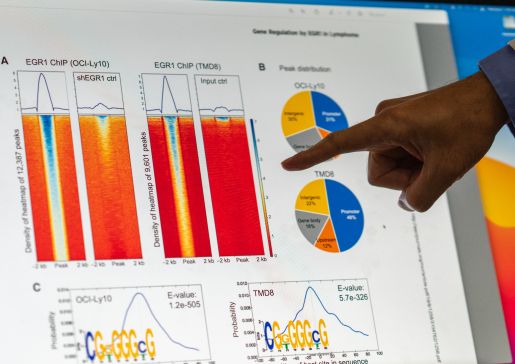
Using integrated multi-omic approaches—including single-cell profiling, epigenomic mapping, and functional genomics—he aims to identify key regulatory dependencies underlying these plastic states. The team then uses patient-derived and murine models to functionally validate findings from multi-omic profiling.
Dr. Denu's work centers on three major mechanisms:
- Examine transcription factor-driven plasticity. For example, the lab has identified that leiomyosarcomas (a smooth muscle-derived cancer) rely on nuclear factor I (NFI) transcription factors to drive a mesenchymal cell state that is associated with more aggressive biology and adverse patient outcomes.
- Interrogate epigenetic vulnerabilities created by chromatin regulator loss. This has focused on loss of ATRX in sarcoma, which drives chromatin remodeling and creates novel dependencies that we seek to exploit therapeutically.
- Study signaling pathways that enforce dedifferentiation. For example, the lab identified that YAP-TEAD signaling is important for driving dedifferentiation in liposarcoma.
Ultimately, the Denu lab's goal is to translate these mechanistic insights into biomarker-driven therapeutic strategies that constrain plasticity and improve outcomes for patients with sarcoma.
The Ryan Denu Research Group is seeking talented and motivated people at every level of training and experience, including scientists, technicians, postdoctoral fellows, graduate students, and undergraduate students, to contribute to our mission to end sarcoma. Most importantly, we seek individuals that will fit the collaborative, generous, and fun environment in the lab.
- Scientists and technicians: We are actively looking to hire a technician and/or staff scientist in the next year. Competitive applicants will have experience in epigenetics, mammalian cell culture, mouse handling, molecular biology techniques, and/or computational biology and ability to code.
- Postdoctoral fellows: Post-doctoral training in the Ryan Denu Research Group is highly individualized and tailored to the specific career goals of the fellow. Interested fellows are encouraged to contact Dr. Denu directly and attach a CV and cover letter.
- Graduate students: Dr. Denu is a trainer in the following graduate programs: Cell & Molecular Biology (CMB), Cell & Molecular Pathology (CMP), Cancer Biology, and Molecular & Cellular Pharmacology (MCP). Students must be accepted to one of these programs to be considered for a rotation and to eventually join the lab. Review Dr. Denu's lab compact.
- Undergraduate students: Dr. Denu got his first experience in the lab as a UW undergraduate, and he relishes the opportunity to mentor and motivate undergraduate students in the lab. We are generally looking for students who can dedicate at least 10 hours per week in the lab for at least 2 years. If you are interested in joining, please email Dr. Denu directly to introduce yourself (background, motivation, future plans) and attach your CV and transcript.
Active Projects
Epigenetic regulation of plasticity
Many sarcomas have complex genomes though low tumor mutation burden and a dearth of gain-of-function point mutations in oncogenes. We hypothesize that epigenomic reprogramming drives sarcoma development and progression. We seek to understand how transcription factors and chromatin remodeling complexes orchestrate epigenomic reprogramming and identify novel therapeutic targets.
Targeting ATRX-deficient sarcomas
ATRX is one of the most commonly altered genes in sarcoma. We seek to model ATRX loss in human-relevant disease models, determine downstream consequences of ATRX loss, and identify exploitable vulnerabilities to treat ATRX-mutant sarcomas.
Funding Support
Dr. Denu’s research is funded by the Department of Defense and the national Leiomyosarcoma SPORE.
News and Media
- Ryan Denu named STAT Wunderkind (UW SMPH news, 2019)