The Division of Nephrology hosts Wisconsin’s first rare kidney diseases conference
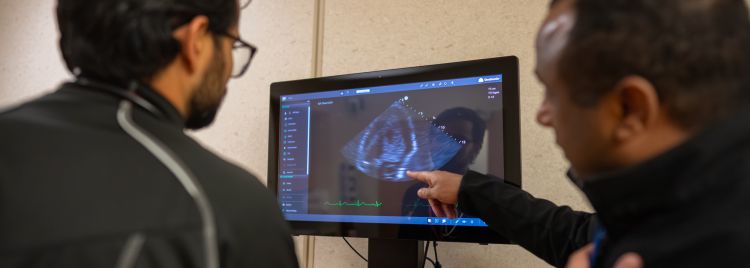
The Division of Nephrology hosted Wisconsin’s first continuing-medical education (CME)-accredited conference dedicated to rare kidney diseases on August 13, 2026.
By bringing together more than 70 nephrology professionals from across the state—including Nephrology faculty, trainees, and alumni, as well as advanced practice providers (APPs), and nephrologists from community practices—the 2026 Advances in Glomerular and Rare Kidney Diseases Conference represents an important step toward building a stronger statewide community around rare kidney diseases.
“Rare kidney diseases require early recognition, specialized expertise, and collaboration between academic centers and community practices,” says Fahad Aziz, MD, Flesch Family Fellow in Kidney Transplant Research and division chief, Nephrology.
“Bringing clinicians together provides an opportunity to share knowledge, strengthen referral networks, and ultimately improve diagnosis and care for patients with these complex conditions. The strong attendance and engagement reinforced the need for this type of educational program in Wisconsin.”
The conference featured Richard Smith, MD, professor and director, Molecular Otolaryngology and Renal Research Laboratories, Carver College of Medicine, University of Iowa, as the keynote speaker.
Dr. Smith is nationally and internationally recognized leader in complement biology and complement-mediated kidney diseases. His presentation, together with interactive sessions and discussions throughout the afternoon, highlighted the rapidly evolving landscape of rare kidney diseases and the importance of translating emerging science into clinical practice.
“Our goal is to continue creating opportunities that connect clinicians, educators, researchers, and patients while advancing education, collaboration, and access to expertise across the state.”
Dr. Fahad Aziz
The conference was made possible through the efforts of Dr. Aziz and Tripti Singh, MBBS, associate professor, Nephrology, together with the planning committee, including Brittany Olson, NP, nurse practitioner – medicine, and Margaret Jorgenson, PharmD, clinical pharmacist, UW Health.
Dr. Aziz says the support and engagement of division faculty, staff, trainees, alumni, and the broader nephrology community, were instrumental in making the inaugural program a success. He also gives thanks to the UW CME office, as well as industry partners who supported the conference.
“Rare kidney diseases may be uncommon, but the need for knowledge, collaboration, and expertise is not,” he concludes. “Our goal is to continue creating opportunities that connect clinicians, educators, researchers, and patients while advancing education, collaboration, and access to expertise across the state.”