"Not just plug-and-play": improving access to infectious disease consultations in rural Wisconsin
A new study finds that automated clinical decision tools might help—if they can be tailored to local realities
Outside major urban areas like Madison and Milwaukee, rural hospitals serve a large portion of Wisconsin. Many of them have limited access to onsite tertiary medical services like infectious disease (ID) consultation.
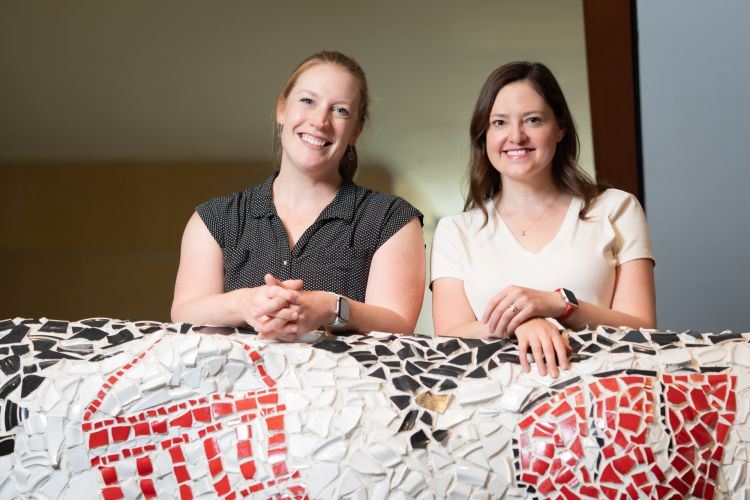
Now, a new study led by University of Wisconsin Department of Medicine (UW DOM) researcher Julie Keating, PhD, scientist I, Infectious Disease, and Laurel Legenza, PharmD, PhD, assistant professor, UW School of Nursing, explores whether it is feasible to improve access through automated clinical decision-making tools and provides perspective on the unique implementation challenges facing rural hospitals.
“Our goal was to see how well an intervention piloted at a major academic medical center could perform in these hospitals,” says Dr. Keating. "Turns out, it's not just plug-and-play."
Developing SABER
A bloodstream infection called Staphylococcus aureus Bacteremia (SAB) can have deadly consequences for hospitalized patients.
But it’s a risk that lowers when treatment is timely and delivered in consultation with an ID specialist, so UW researchers have developed a tool to streamline and speed up the consult process.
The tool—S. aureus Bacteremia Electronic Reminder, or SABER—provides a popup alert in the patient’s electronic health record (EHR) if they have gone 36 or more hours with an SAB-positive blood culture, but no ID consult ordered or recorded. The popup outlines the benefits of an ID consultation and, crucially, gives the option for the provider to directly place an ID consultation.
Dr. Keating was the lead author on an earlier 2025 single-site study co-designed and run by Meghan Brennan, MD, MS, and Alexander Lepak, MD, both associate professors in Infectious Disease. The study found that SABER effectively automated the manual SAB monitoring process at University of Wisconsin Hospital and Clinics. As a result, the antimicrobial stewardship team was able to dedicate more time to other priorities while maintaining a high level of infectious disease consultations and shortening the time to consultation.
Understanding local realities
Dr. Keating and Dr. Legenza—her research colleague in Infectious Disease at the time—wondered about SABER’s broader applicability, particularly in rural areas.
“We asked ourselves: do we even really know what’s happening at rural hospitals?” Dr. Legenza says. “What happens if an alert like this pops up? What is the process for getting a consult? Is there even an infectious disease physician on call?”
For a clearer picture of SAB care and ID consultation culture across the state, they interviewed six volunteers representing six rural Wisconsin hospitals, including independent critical access hospitals (those with 25 beds or less) and facilities within larger health systems serving rural communities. Participants were pharmacists, infection preventionists, and laboratory managers familiar with SAB management and ID consultations at their hospitals.
We asked ourselves: do we even really know what's happening at rural hospitals?
Dr. Laurel Legenza
Immediately apparent was the variability from hospital to hospital. For example, some could provide an ID consult on site, while others could only do consults by phone or over Zoom. Operations also varied by hospital due to factors such as organizational complexity, insurance requirements, differences in EHR systems, and varying levels of consultation expertise.
And when they asked participants if the alert would help clinical decision making, the response was mixed in its own way, Dr. Legenza says.
“A universal response was that it could be helpful, but only if it can be tailored to fit a hospital’s existing consulting culture and workflows. Because just getting an alert telling you to get an ID consult is not necessarily helpful when the practice of getting the consult is also complicated.”
And sometimes, Dr. Keating adds, “There was some hesitancy to make changes just because it means even more work to get approvals. The conflict between a local site needing a locally designed and tailored alert—but also needing to get that approved by a larger umbrella organization—is an issue that will need to be addressed somehow.”
Reaching the right people
Across interviews, one takeaway emerged repeatedly: in rural hospitals, care often depends on people finding ways to bridge gaps that systems cannot.
“Some of these hospitals might have these doctors and infection control nurses who may have been there for many years, who have these close relationships with people in the hospital and the community,” Dr. Legenza says. They are the individuals who can identify resources, get around logistical hurdles, and move the conversation forward to ensure patients receive the care they need.
And, even in the absence of readily available ID consultations, an EHR alert can still act as a flag to providers and initiate first-line therapies for patients with SAB.
“It might just be about getting people to pause and recognize that there’s an issue,” says Dr. Keating. “It can also provide a few brief notes about guideline-concordant care, while reinforcing the need to notify relevant people like pharmacists for follow-up. It could completely change a patient’s trajectory.”
In other words: tools like SABER may help guide clinical decisions, but improving outcomes ultimately depends on supporting the people who make those decisions every day.
“I think we’re all really passionate about living that Wisconsin Idea and making sure that the things we discover at the University of Wisconsin are accessible for everyone,” Dr. Keating concludes. “To do that, we need to listen to the experts on the ground.”
__
This project was made possible by the UW-Madison Institute for Clinical & Translational Research (ICTR) with support from NIH-NCATS Clinical and Translational Science Award (CTSA) 1UL1TR002373 and funds through a grant from the Wisconsin Partnership Program at the University of Wisconsin School of Medicine and Public Health Program, Wisconsin Partnership Program (WPP 5129).