Dr. Andrea Galmozzi and SMPH researchers find molecular mechanism that could boost calorie burning
The findings hold potential for developing new treatments for diabetes and obesity
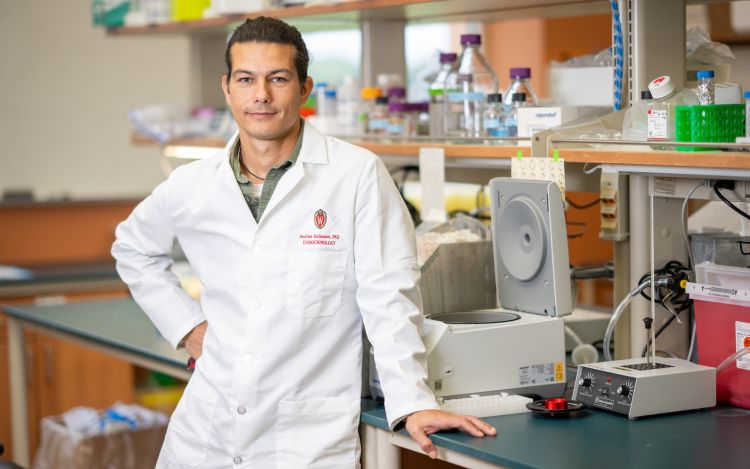
A team of University of Wisconsin School of Medicine and Public Health (UW SMPH) researchers led by Andrea Galmozzi, PhD, assistant professor, Endocrinology, Diabetes and Metabolism, has identified a molecular mechanism that could help improve metabolism and inform new treatments for obesity and diabetes. The findings were recently published in Nature Metabolism.
By studying a specialized type of energy-burning fat, called brown adipose tissue or brown fat, Dr. Galmozzi and his colleagues identified the main source of heme—a molecule essential for these fat cells to generate heat and maintain metabolic health. The team found that when heme production is disrupted in mice, brown fat loses its ability to burn energy efficiently, triggering metabolic changes commonly seen in obesity and diabetes.
Biologically simulating the metabolic disease conditions allowed them to discover a gene they suspect could be targeted to speed up heme production, thus speeding up energy burn.
“If we find a way to restore the proper expression of these enzymes, we might be able to increase the flux through this metabolic pathway and improve insulin sensitivity and glucose control,” Dr. Galmozzi says. “We are trying to identify functional mechanisms that we can pharmacologically modulate to restore metabolic health.”