Dr. Christopher Sundberg investigates links between muscle fatigue, mobility and healthy aging
New Geriatrics faculty member recruited through the Wisconsin RISE-THRIVE initiative
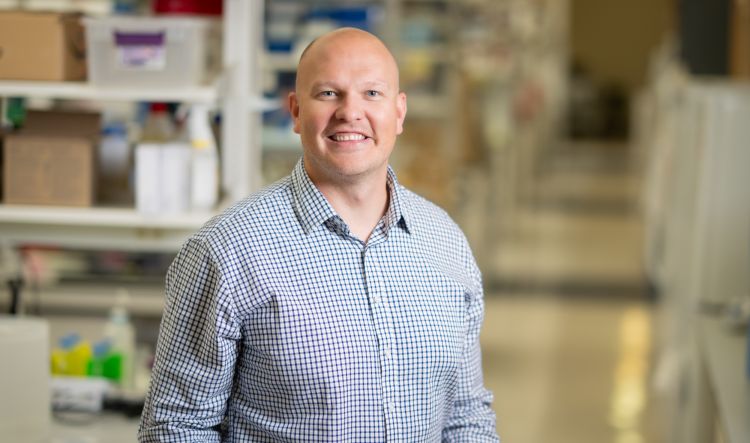
Preserving physical function in an aging population is one of the biggest challenges in medicine and public health.
It’s a challenge that Christopher Sundberg, PhD, a former Division I student-athlete, is ready to tackle head on.
An assistant professor in the Division of Geriatrics and Gerontology and the Department of Kinesiology, Dr. Sundberg joined the department on September 1, 2025, after five years as a faculty member at Marquette University.
He was recruited through the Wisconsin RISE-THRIVE Initiative, which focuses on the study of healthspan, or the number of years a person is not only alive but healthy.
An expert on the biology of muscle fatigue and how it changes as people age, Dr. Sundberg aims to advance interventions that promote resilience, independence, and quality of life in older adults.
Learn more about his work in the Q&A below.
Your research focuses on the biology of muscle fatigue and how it changes through the lifespan. Why is that important?
When people hear “muscle fatigue,” they often picture athletes pushing through a tough workout. But fatigue shapes how all of us move through daily life.
Think about choosing between taking the stairs or the elevator. We know taking the stairs is healthier, but we may hesitate because our legs burn, we get winded, or we feel unsteady.
Those everyday decisions become even more challenging as we age. Muscle weakness and fatigue can lead to fear of falling, and eventually, to avoiding physical activity, which ironically is one of the best ways to preserve health and independence.
My research focuses on identifying the cellular, molecular, and physiological changes that drive muscle fatigue. This can help us design better strategies to help people stay mobile, active, and confident in their daily lives as they grow older.
What is unique about your research program?
We try to understand muscle fatigue “from the inside out.” We evaluate whole-muscle size and function in people, but we also drill down into single muscle fibers and the individual proteins they’re made of.
This lets us pinpoint how aging affects the smallest building blocks of muscle and how microscopic changes scale up to influence mobility and daily function.
We also try to keep our work grounded in real-world relevance. We don’t just measure muscle weakness and fatigue; we focus on uncovering why it occurs and how we can intervene.
Our integrative approach is rare, and it allows us to generate insights that are mechanistically deep and clinically meaningful. I’m really proud of that.
We don’t just measure muscle weakness and fatigue; we focus on uncovering why it occurs and how we can intervene.
Dr. Sundberg
How does your work align with RISE-THRIVE?
RISE-THRIVE advances interdisciplinary research on resilience, healthy aging, and well-being across the lifespan. My research aligns directly with this mission.
We’re laying the groundwork for strategies that help people stay stronger and more independent as they get older. In many ways, our work provides the foundational science behind RISE-THRIVE’s broader goal of helping people live longer, healthier, more active lives.
What was the biggest reason you decided to come to UW–Madison?
The collaborative culture was the biggest draw. UW–Madison is one of the few places where world-class basic science, clinical research, and community engagement all happen under the same roof.
People here view aging research as a campus-wide priority. It’s incredibly rare to find a place where the mission of your research aligns so directly with a university-wide initiative.
I also felt that UW–Madison is a place where I can grow not only in my research program, but as part of a community that deeply values mentoring, communication, and interdisciplinary problem-solving. Here, big ideas are welcomed and supported with resources to bring them to life.
I believe science should be collaborative, accessible, and fun...If there’s a chance to build something together, whether it’s a project, a conversation, or a new way of thinking about a problem, I’m all in!
Where do you hope to take your research program in the coming years?
I hope to not only uncover the cellular mechanisms behind muscle fatigue, but also translate those insights into meaningful solutions.
That means deepening our integrative approach to understanding how muscles, nerves, blood vessels, and energy systems together contribute to the decline of muscle function in older adults.
Long-term, my goal is to develop targeted strategies to identify people at risk for physical disability before it appears: to shift from reacting to disability to preventing it from occurring in the first place. This is a very bold vision, and one that could only happen through the collective strength of UW–Madison’s collaborative community.
Finally, with momentum from the RISE-THRIVE initiative and the exceptional strength of the aging research community on campus, I hope to collaborate on efforts to bring a Claude D. Pepper Older American Independence Center to UW–Madison.
What is the most important thing people should know about you?
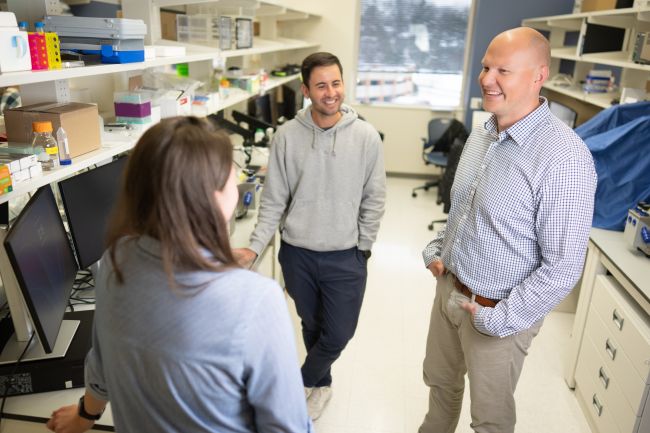
I believe science should be collaborative, accessible, and fun. I’m a nerd and love digging into detailed physiology, but I’m equally passionate about communicating that science in a way that resonates with students, colleagues, and the broader community.
I also thrive on teamwork. The best science comes from combining perspectives, and I’m excited to build partnerships across campus, from basic biologists to clinicians to data scientists.
If there’s a chance to build something together, whether it’s a project, a conversation, or a new way of thinking about a problem, I’m all in!