
DOM Research Day is a full-day, in-person event held annually at the Health Sciences Learning Center (HSLC) featuring a Grand Rounds speaker, engaging poster and breakout sessions and presentations where faculty, staff, trainee and student investigators present their cutting-edge work.
Why attend?
- Explore cutting-edge research and inspiring short talks
- Connect with colleagues and spark new ideas
- Dive into breakout sessions for deeper discussion
- Celebrate the achievements of our faculty, staff, trainees, and students
Research Abstracts
All DOM faculty, staff and trainees are invited to submit research abstracts for the poster session, along with students engaged in a DOM research program.
Why share your work?
- Your research matters. Gain recognition from your peers.
- Inspire others. Spark conversations that lead to breakthroughs.
- Shape the future. Collaborate with others who are as energized by research and discovery as you are.
You may be the lead author on only one abstract, but you can co-author multiple submissions. Abstracts previously submitted to national meetings are welcome. Case studies will not be accepted.
Read the 2026 Call for Research Abstracts
- Formatting
Write your one-page research abstract in Arial font, size 11 or larger.
Suggested structure for your abstract:
- Introduction (2–3 sentences): Explain why your project matters in a clinical setting.
- Methods (2–4 sentences): Describe how you carried out the research.
- Results (4–6 sentences): Summarize what you discovered.
- Discussion (2–3 sentences): Explain what your results mean and how they connect to your introduction.
You can include images or figures if they help explain your work.
Resources:
- Submission Process
- Download and complete the Research Day Abstract Submission Form and attach your single-page abstract to it as a PDF.
- Save the form using this naming convention: First Author’s Last Name.First Initial_Date of Submission (Example: Smith.A_02.12.26)
- Upload your form (with abstract attached) to the Abstract Submission Portal before 5 pm on Friday, February 20, 2026. Extensions will not be granted.
- Review Process
All eligible abstracts are reviewed and scored by the Research Education Committee. They look for effective and efficient communication of your research's relevance and key findings. Here's what they consider:
- Introduction: Does it concisely describe the main subject, purpose, and importance of the research? Are they connected to the research's relevance and context?
- Methods: Is there a clear description of what was done, with enough detail to conclude the methods were appropriate to the research?
- Results: Are the findings and observations concisely described and interpreted logically?
- Discussion: Do the concluding comments relate the results back to the research question, purpose, and the broader field?
- Format and Submission:
- Well-written, complete sentences with correct grammar and punctuation
- Free of spelling errors; all acronyms are defined
- Follows the formatting guidelines in the submission form
- Abstract is attached as a PDF
- Author Honors and Awards
Lead authors are chosen from among the top-scoring abstracts for each of the categories: basic, clinical, and translational and health services.
Those selected are honored with a speaking slot, an award ribbon and $150 in funds for professional development/research expenses.
All authors are invited to display a poster at the event, regardless of score, if criteria is met and space permits.
- DOM Division "Leader of the Pack" Award
The Department of Medicine division with the most submissions, weighted by the division’s full faculty population, is recognized with the “Leader of the Pack” traveling trophy. The award gives bragging rights and remains with the division until the next year, when it is awarded again.
Previous Awardees:
- 2026: Division of Geriatrics and Gerontology
- 2025: Division of Endocrinology, Diabetes and Metabolism
- 2024: Division of Endocrinology, Diabetes and Metabolism
Image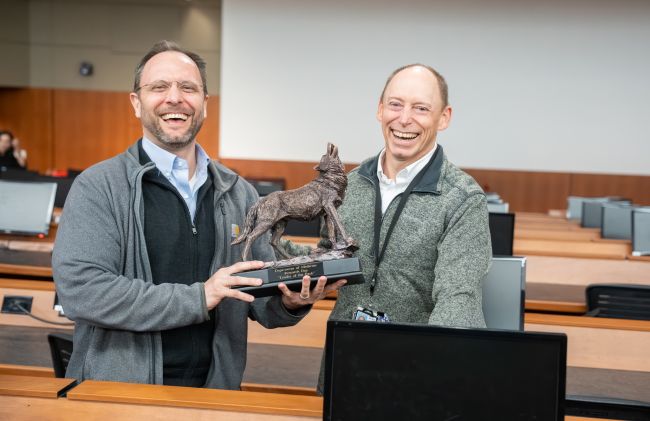
Above, from left: James Lewallen, MBA, division administrator, and Steve Barczi, MD, division chief, Geriatrics and Gerontology, accept the Leader of the Pack Award on Research Day
Posters
- Poster Sizes & Specifications
All posters should be 48" wide x 36" tall with a 1" border or 48" square with a 1" border to align with NIH-recommended dimensions.
Note: poster display spaces are only 48" wide, and each display board holds two posters on each side. Presenters with oversized posters will need to work within the space provided.
- Designing & Printing Posters
Use the department-branded template for research posters. It uses consistent colors, logos and layouts in line with campus and department brand standards.
Printing resources:
- Poster Review Process
Event judges will review and score all posters based on whether significance, innovation, and approach have been adequately presented. They also take into consideration the quality of the overall presentation and the knowledge and enthusiasm of the presenter. Final scores will be comprised of 50% the poster score and 50% the abstract score.
- Poster Honors and Awards
Multiple awards are given in various non-tenured rank or level categories. Winners receive award ribbons and $150 in departmental funds for professional development and research expenses.
Dr. Schnapp, the department chair, also recognizes two additional posters that stand out for their visual appeal and layout while clearly presenting their significance, innovation, and approach. To be competitive, review the "Designing & Printing Posters" section for tips on making posters.
Past Events
- 2026
Event Day Links
Agenda (PDF)
Index of Posters (PDF)
Event Recognition (PDF)
Award Winners (PDF)
Afternoon Session Speakers
- Basic: "JAK/STAT Blockade Corrects IFN Driven Inflammation in B6.Aec1Aec2 mouse" - Eiko Yamada, DDS, PhD, scientist II, Rheumatology
- Translational: "Systemic Interleukin-6 Levels in Adults with Asthma are Associated with Adverse Quantitative Thoracic Computed Tomography Body Composition Metrics: The Severe Asthma Research Program (SARP)" - Elizabeth Fasbender, fourth-year medical student, Cardiovascular Medicine
- Clinical: "Low Sensitivity of Commercial Assays for Measles Seroprotection in Adult Patients with Inflammatory Bowel Disease" - Yash Hegde, MD, resident, Gastroenterology and Hepatology
- Health Services: "Comparing prognostic performance and reasoning between large language models and physicians: An embedded mixed methods study" - Megan Gjertsen, MD, resident, Allergy, Pulmonary and Critical Care Medicine
- 2025
View a Department of Medicine story and video recapping the event.
Event Day Links
Agenda (PDF)
Index of Posters (PDF)
Event Recognition (PDF)
Award Winners (PDF)
Breakout Session Slides
Interacting & Partnering with Industry
Grand Rounds Speaker
Image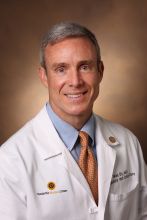
“Healing ICU Care: Harnessing the Power of Science and Humanism" (YouTube video)
E Wesley Ely, MD, MPH
Professor of Medicine
Division of Allergy, Pulmonary and Critical Care Medicine
Grant W. Liddle ChairDr. Ely is an internist, pulmonologist, and critical care physician. Dr. Ely earned his MD at Tulane University School of Medicine, in conjunction with a master's in public health. He serves as the Grant W. Liddle endowed chair in medicine and is a physician-scientist and tenured Professor at Vanderbilt University Medical Center. He is also the Associate Director of aging research for the Tennessee Valley Veteran’s Affairs Geriatric Research Education Clinical Center (GRECC) in Nashville TN. He is the founder and co-director of the Critical Illness, Brain Dysfunction, and Survivorship (CIBS) Center, and a pioneer in the investigation of delirium and long-term cognitive outcomes, including dementia, in survivors of critical illness, with continuous NIH and VA funding for 25 years and over 600 peer reviewed publications. Dr. Ely is the author of a work of narrative non-fiction entitled Every Deep-Drawn Breath, from which he’s donating 100% net proceeds to help COVID survivors and family members rebuild their lives.
Afternoon Session Speakers
- "Glutamine-fructose-6 phosphate transaminase 2, a rate limiting enzyme of the Hexosamine Biosynthetic Pathway, is increased in cultured human precision cut lung slices, an ex vivo model of human lung fibrosis" - Angie Tebon Oler, researcher II, Allergy, Pulmonary and Critical Care Medicine
- "Longitudinal evaluation of 18F-MK-6240 in patients with Alzheimer’s disease dementia or mild cognitive impairment compared to healthy volunteers" - Anna Giarratana, MD, PhD, resident, Nuclear Medicine Residency, UW Department of Radiology
- "Bringing NCI’s Moonshot Cancer Center Cessation Initiative to UW Carbone Cancer Center: A Pilot Centralized Proactive Outreach Approach to Offer Tobacco Treatment for Patients with Cancer" - Jesse Kaye, PhD, scientist III, UW Center for Tobacco Research and Intervention
- "Gender Disparities in Sodium-Glucose Co-transporter 2 Inhibitor Prescribing: Insights from an Academic Endocrinology Clinic" - Victor Compres Matos, MD, fellow, Endocrinology, Diabetes and Metabolism
- 2024
View a Department of Medicine story and video recapping the event.
Agenda (PDF)
Index of Poster Presentations (PDF)
Health Equity Resources (PDF)
Event Recognition (PDF)
Poster Award Winners (PDF)
Grand Rounds Speaker
“Respiratory Health Disparities: Root Causes and Opportunities for Action”
Image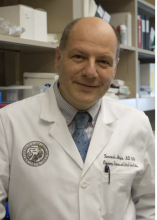
Fernando Holguin, MD, MPH
Professor of Medicine
Professor of Pediatrics
Associate Vice Chair for Research, Department of MedicineDr. Fernando Holguin is a pulmonologist and professor of medicine and pediatrics in the Division of Pulmonary Sciences and Critical Care Medicine at the University of Colorado Anschutz Medical Campus in Aurora, Colorado. He grew up in Mexico City, where he went to medical school. He did his pulmonary and critical care training and was a junior faculty at Emory University in Atlanta, where he also worked as a medical epidemiologist at the Centers for Disease Control and Prevention. He was subsequently recruited to the University of Pittsburgh, prior to joining the University of Colorado.
Throughout his academic career, Dr. Holguin has focused much on his work on translational research and patient care. He has been in practice for more than 25 years and has many clinical interests including air pollution, obesity as an asthma comorbidity, and treatment of severe asthma. Dr. Holguin is currently Director of Asthma Clinical and Research Programs at the University of Colorado. He also served as the co-chair of the American Thoracic Society and European Respiratory Society Task Force on severe asthma. He has been continuously funded throughout his academic career by the NIH, DOD, ALA and the EPA. His work initially focused on air pollution, epidemiology of chronic airways diseases, and lung physiology, but more recently, his work is focusing on airway epithelial metabolism as it relates to airway dysfunction in obesity and asthma. Dr. Holguin has authored or co-authored more than 220 papers and is internationally known for his work in asthma, COPD and air pollution.
Dr. Holguin enjoys spending time with his family (wife Shanta, and sons Mateo and Diego), skiing, reading, and traveling to new places.
Afternoon Sessions
To represent the excellence and breadth of research being conducted by the Department of Medicine, the lead authors of the top-scoring abstracts from the four categories of research (i.e., basic, translational, clinical and health services/health equity) presented their work.
- "Mechanistic Insights into Sphingomyelinase-Mediated Pathways in Cardiomyocytes: From Calcium Signaling Disruption to ROS Production” presented by Zach Spears, BS, student, Cardiovascular Medicine
- "Differential Patterns of Immune Infiltration in the Tumor Immune Microenvironment Associate with Therapeutic Response in Primary Prostate Cancer Following Chemohormonal Therapy" presented by Erika Heninger, PhD, scientist III, Hematology, Medical Oncology, and Palliative Care
- "Pre-transplant malnutrition, particularly with muscle depletion is associated with adverse outcomes after kidney transplantation” presented by Jessa Engelken, MPH, RDN, and Katrina Kennedy MS, RDN, both clinical nutritionists, Nephrology
- "Destigmatizing Clinical Documentation Using Spell Check" presented by David Sterken, MD, assistant clinical professor, Hospital Medicine
- 2023
No event was held in 2023.
- 2022
- Image
Grand Rounds Speaker
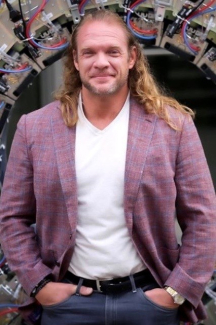
“AT(N) Biomarkers Among Diverse Populations: Re-Thinking Alzheimer’s Disease.”
Sid O’Bryant, PhD
Executive Director, Institute for Translational Research, University of North Texas Health Science Center
As the population of those aged 65 and over continues to grow, so does the diversity of the U.S. population. In fact, by 2060 approximately 27.5% of the population will be Hispanic, 15% will be African American, and 44.3% will be non-Hispanic white.
Dr. Sid O'Bryant is the principal investigator of the Health & Aging Brain Study – Health Disparities (HABS-HD), which is the most comprehensive study of Alzheimer’s disease among the three largest racial/ethnic groups in the U.S. ever conducted – African Americans, Mexican Americans, non-Hispanic whites.
The goal of the HABS-HD program is to understand the life course factors, including biological, sociocultural, environmental, and behavioral, that impact risk for Alzheimer’s disease in late life. This work will ultimately lead to population-specific precision medicine approaches to treating and preventing Alzheimer’s disease (i.e., “treating your Alzheimer’s disease”).
In addition to being a global leader in Mexican American cognitive aging, Dr. O’Bryant is a global expert in precision medicine approaches to novel diagnostic and therapeutic strategies for Alzheimer’s disease, Parkinson’s disease, Dementia with Lewy Bodies and Alzheimer’s disease among adults with Down Syndrome.
Keynote Speaker
Image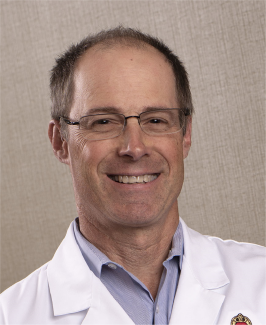
“Stem Cell-derived Islets: A Potential Beta Cell Replacement Therapy for All?”
Jon S. Odorico, MD, FACS, FAST
Dr. Odorico is Director of the Pancreas and Islet Cell Transplantation Programs and Professor in the Department of Surgery, Division of Organ Transplantation at the University of Wisconsin-Madison School of Medicine and Public Health.
He received his Chemistry BS from Duke University and M.D. from New York University. He completed General Surgery training as well as a post-doctoral research fellowship, at the University of Pennsylvania and an Organ Transplant Fellowship at the University of Wisconsin.
The University of Wisconsin Pancreas Transplant Program consistently ranks among the highest volume programs in the world and has developed many field-leading innovations.
Dr. Odorico has an active, extramurally funded research laboratory that focuses on beta cell differentiation from pluripotent stem cells. He previously served as President of IPITA and Chair of the UNOS Pancreas Committee. He is also the scientific co-founder of Regenerative Medical Solutions, Inc.