The Staff Well-being and Professional Development Committee promotes staff morale, professional growth and overall well-being by developing activities and recommending workplace and policy improvements.
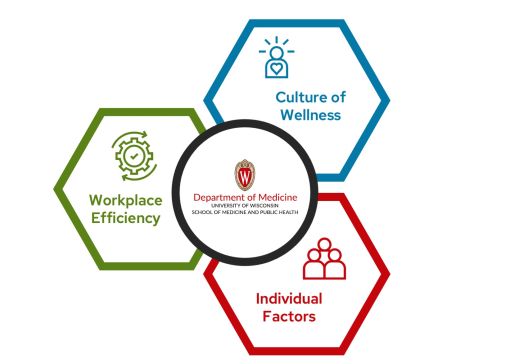


Culture of Wellness
Personal skills, resources, habits and attitudes support staff well-being while acknowledging that organizational conditions have an impact.
- Self valuation and care — Staff feel empowered to prioritize well-being, set boundaries and invest in personal growth.
- Mental health and emotional support — Counseling, stress-management resources and peer support are easy to access and stigma-free.
- Peer support — Structured ways to connect, share challenges and build community.
- Health promotion resources — Programs that promote movement, sleep, ergonomics, stress reduction, and overall health.
- Life-needs support — Resources that help with finances, caregiving and other personal stressors.

 Career Development

 Digital Accessibility

 Incident Response

 Meeting Managment

 Onboarding

 Performance Management

 Project Management

 Supervisors

 Teamwork
Workplace Efficiency
Systems, tools, processes and workflows help staff do their work effectively while minimizing inefficiencies, frustration and unnecessary stress.
- Redesign inefficient systems — Remove barriers, fix broken workflows and eliminate tasks that waste time.
- Staff‑driven improvements — Staff help shape workflow redesigns and technology changes.
- Thoughtful workspaces — Physical and digital spaces make it easy to communicate, collaborate and focus.
- Efficient communication — Simple, reliable communication channels reduce message overload and give clear expectations.
- Clear roles and appropriate workloads — Job duties match skills, schedules are predictable and staffing meets demand.


Committee-hosted Workshops:
- Learn@UW Demystifies AI: A Workshop of UW–Madison Tools (slides | recording)
- Making Change Work: A People Centered Approach (slides | S.E.A.T. Toolkit)
Professional Development Funding

 DOM Grants
Individual Factors
Values, leadership behaviors and workplace norms create a healthy, supportive and inclusive environment for staff.
- Supportive leadership — Leaders show commitment to staff well-being by modeling healthy behaviors, communicating openly and prioritizing well-being in decisions.
- Team climate and psychological safety — Staff feel respected and free to speak up, share ideas and raise concerns without fear of retaliation.
- Values alignment — Staff feel connected to the organization’s values and believe their work matters.
- Recognition and appreciation — The workplace has regular, simple ways to acknowledge and thank staff for their contributions.
- Fairness and belonging — Clear policies prevent mistreatment, promote inclusion and support a fair and respectful culture.